
Wildebeest
Stars of the Great Migration / Best seen: Serengeti
Wildebeest
The wildebeest, or gnu, is an antelope, and in the Serengeti-Mara ecosystem it moves in the greatest herds on Earth. More than a million wildebeest, with zebras and Thomson's gazelles, follow the rains in a year-round circle. The migration has no fixed start or end: it speeds up or slows down with the rain and the grass.
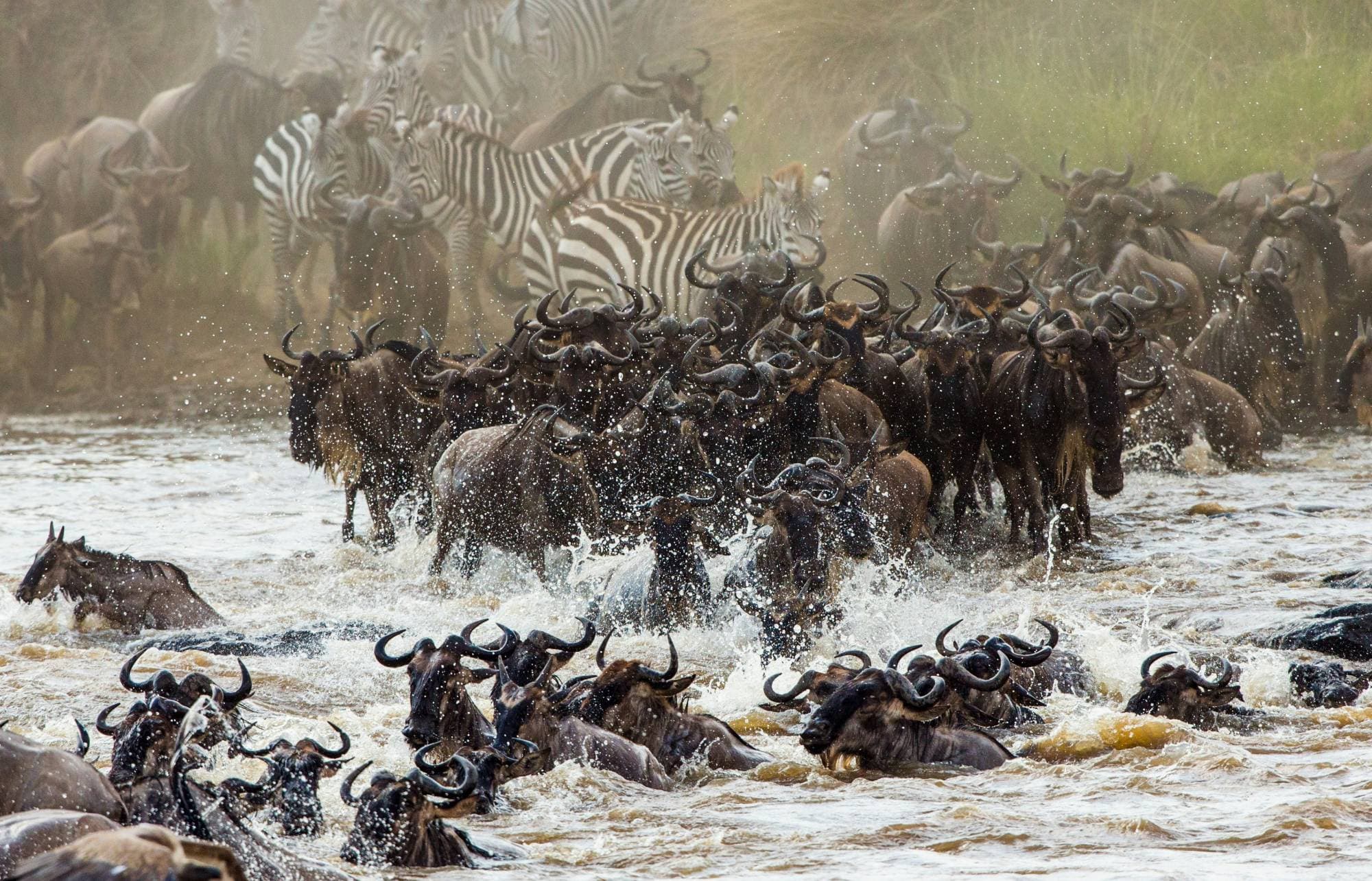
Around February, half a million calves are born on the southern plains within a few weeks, and predators gather for the feast. From about July to October the herds reach the Mara River, where they must plunge down steep banks into water full of crocodiles. Often called one of the "Ugly Five", the wildebeest is a survivor whose horns are used to defend its calves.
Good to know
- Calves can stand within minutes of birth and run with the herd soon after.
- Wildebeest graze best after zebras have cut the long grass short.
- River crossings can take minutes to start or many hours; patience is rewarded.
- Their constant grunting is the soundtrack of the migration.
Where to see it
Background reading: James Currie, The Great Tours: African Safari (The Great Courses with National Geographic), alongside the national park authorities. Wording is our own; check fees and rules with the parks before you travel.
Sample safaris to these places
 5 days
Tanzania
5-Day Tarangire, Serengeti and Ngorongoro Safari
The classic northern trio, with two days on the Serengeti plains, in under a week.
From $1,570
 7 days
Tanzania
7-Day Serengeti and Ngorongoro Safari
Lake Manyara, two days on the Serengeti and the Ngorongoro Crater, at a comfortable pace.
From $1,600
 7 days
Tanzania
7-Day Wildebeest Calving Safari at Ndutu
January to March on the Ndutu plains, where the wildebeest give birth and the big cats follow, plus the Ngorongoro Crater.
From $2,190
 9 days
Tanzania
9-Day Northern Tanzania Safari
Four northern parks without rushing, including three days in the Serengeti.
From $2,230
 9 days
Tanzania
9-Day Mara River Crossing Safari
Two days in the northern Serengeti for the Mara River crossings, usually July to October, peaking in August and September.
From $2,370
 11 days
Tanzania
11-Day Relaxed Tanzania Safari with Flights
A gentler pace with a rest day and light-aircraft flights in place of the longest drives.
From $8,100


